
Madlen Hirtentreu, Darja Popolitova
Neanderthal Beauty Clinic
17.07.2026 - 29.08.2026.
Curator: Lilian Hiob-Küttis
“Neanderthal Beauty Clinic” is an installation created by Madlen Hirtentreu and Darja Popolitova, exploring how beauty procedures have become quickly consumable products and revealing how activities marketed as self-care can conceal mechanisms of bodily control and subjugation.
Hirtentreu’s and Popolitova’s installation presents an aesthetic laboratory with an undefined temporal origin. It is partly a shrine, partly a clinic, where medical and cosmetic objects intertwine – everything from LED masks, syringes, nose-slimming clips and foam toe separators – as well as animal-derived artefacts and materials like silver, charcoal, and stone, all of which appear to be part of an attempt to invent yet another absurd beauty procedure promising eternal youth for the body. Through the materials used, the artists highlight the invasive methods and almost unattainable standards employed in the pursuit of beauty and youth.
At the very centre of the installation stands a dental chair, surrounded by beauty equipment readily available to cut, inject, smooth and slim. In a world, where beauty standards move at the same pace as fast fashion and jaw line, lip shape, brows and skin tone constantly need changing and perfecting, a person’s body becomes a project forever in need of optimisation. The artists question the neoliberal beauty culture’s promise of freedom and self-fulfilment and reveal how the said freedom and perfection are often nothing but well-marketed pressure. Theorist Victoria Pitts-Taylor, who has researched the power dynamic between the body and power in beauty culture points out that even though beauty procedures are presented as a personal choice, the choices (above all) women make are born in a social space, where certain choices are awarded with approval and belonging, deviating from these, however, is punished by social ostracisation.
For both Neanderthals and modern humans, appearance is linked to belonging. Archaeological findings suggest that Neanderthals used natural materials such as stone beads, bird claws, and red ochre as adornment. In addition to being decorative, such practices likely expressed belonging, status or indicated the position in the social hierarchy. Whereas earlier beauty rituals were tied to nature, the environment and the community, today’s beauty standards demand the body be constantly adapted to rapidly changing trends. This type of perpetual pressure to conform increasingly alienates people from their bodies. Beauty standards are no longer passed down slowly through traditions but instead disseminated via algorithms and screens. Beauty ideals are not only reflected but also created by social media.
“Neanderthal Beauty Clinic” juxtaposes the technological and the natural, the ancient and the contemporary, questioning under what conditions belonging is possible in today’s society. In neoliberal beauty culture, belonging is shaped not through shared experience, but through customised body norms. Although self-care is presented as an expression of personal freedom, in reality, it unfolds within an increasingly narrow aesthetic framework, where both body and mind must constantly adapt to external directives.
Madlen Hirtentreu (1993) is a multidisciplinary artist, whose work encompasses sculpture and site-specific installations. She holds a bachelor’s degree in visual communication from the Istituto Europeo di Design in Milan and a master’s degree in sculpture and installation art from the Estonian Academy of Arts. She is currently studying jewellery and blacksmithing. Hirtentreu’s work explores memory, history and materiality, through which she dissolves boundaries between archaeology, speculative fiction and industrial aesthetics. Her sculptures and installations evoke both archaeological excavations and visions of the future. Hirtentreu’s works often reference absence or disappearance. She frequently creates ghostly, hybrid and fragmented bodies or abandoned structures that conjure up a sense of loss or vacancy. Hirtentreu views history as a process of constant reinterpretation. She treats objects and materials as fossils of an unknown future.
Darja Popolitova (1989) is a contemporary jewelry artist, as well as a doctoral student and lecturer at the Estonian Academy of Arts. Born in Sillamäe in 1989, she lives and works in Tallinn. Her work examines contemporary life with a touch of irony, inspiring her to combine (digital) craftsmanship, video performance, and fiction. Popolitova approaches the tactile and symbolic aspects of jewelry as a means of conceptualizing artistic ideas and as a form of expression.
Popolitova has received numerous awards and grants, including the Cultural Endowment of Estonia’s Annual Award (2020), the EKA Research Publication Award (2020), the Adamson-Eric Scholarship (2018), and the artist’s salary (2022). She has exhibited her work at the Smack Mellon gallery in New York (2022), the Museum Arnhem in the Netherlands (2020), and the Museum of Arts and Design in New York (2019).
Lilian Hiob-Küttis (1991) is a curator, writer and art agent, founder of Hoib Gallery and former director of Temnikova & Kasela Gallery. Hiob-Küttis holds a master’s degree in art history and visual culture from the Estonian Academy of Arts. She is a guest lecturer for curatorial students at the Estonian Academy of Arts and also teaches at EKA’s Open Academy. As a curator, she has collaborated with major companies such as Sunly and Synlab. Her recent curatorial projects include “Old Venus” at Punctum Gallery, “Sandwiches with Summer and Wind” at the Green Hall in Telliskivi, “Exobiota” at Kogo Gallery in Tartu, “Shifting Sand” at Asni Gallery in Riga and “Breaking up of Ice on a River” at Margot Samel Gallery in New York.
Supported by: State Culture Capital Foundation, Cultural Endowment of Estonia.
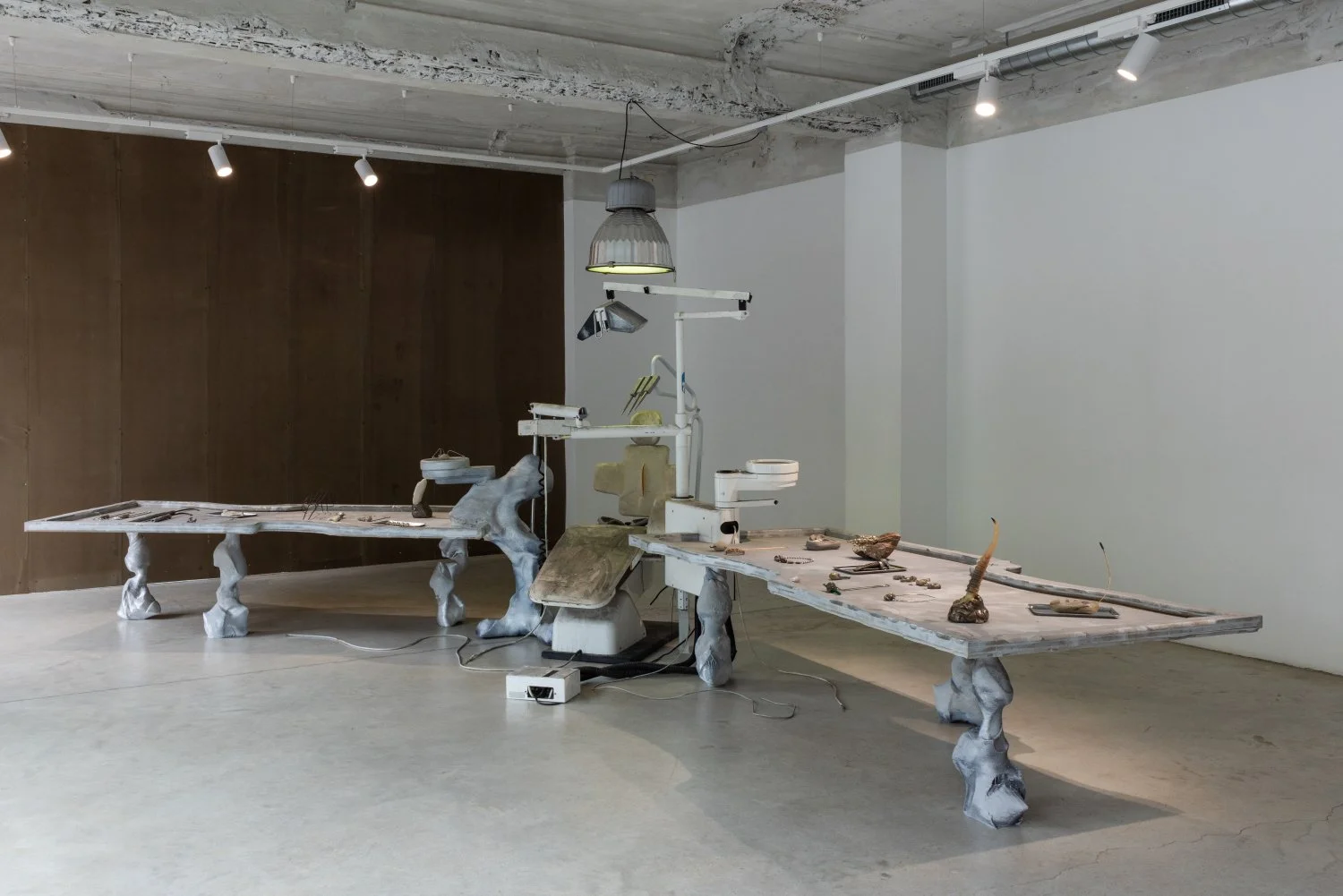
Installation view, Neanderthal Beauty Clinic, 2026. Photo: Kristīne Madjare
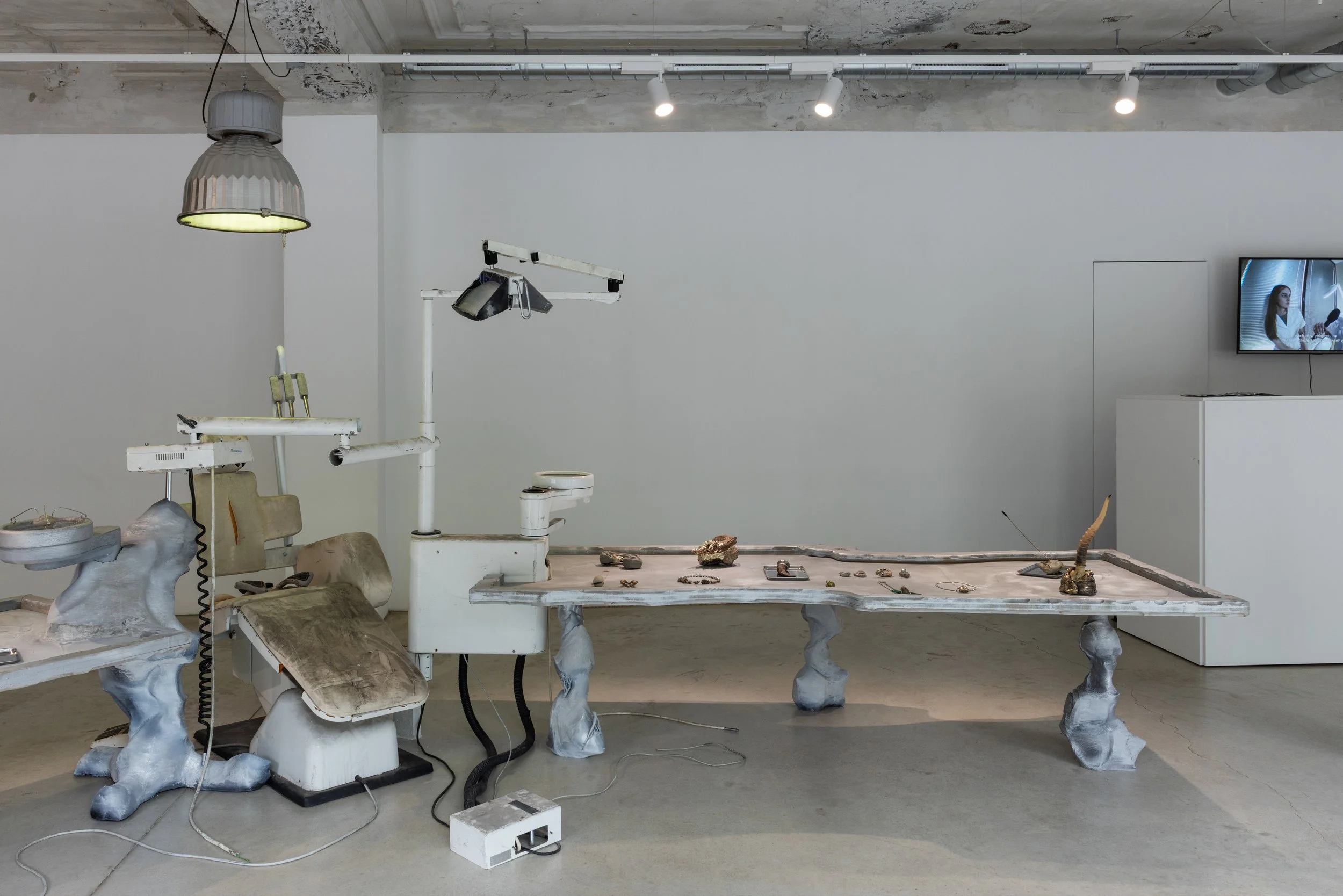
Installation view, Neanderthal Beauty Clinic, 2026. Photo: Kristīne Madjare
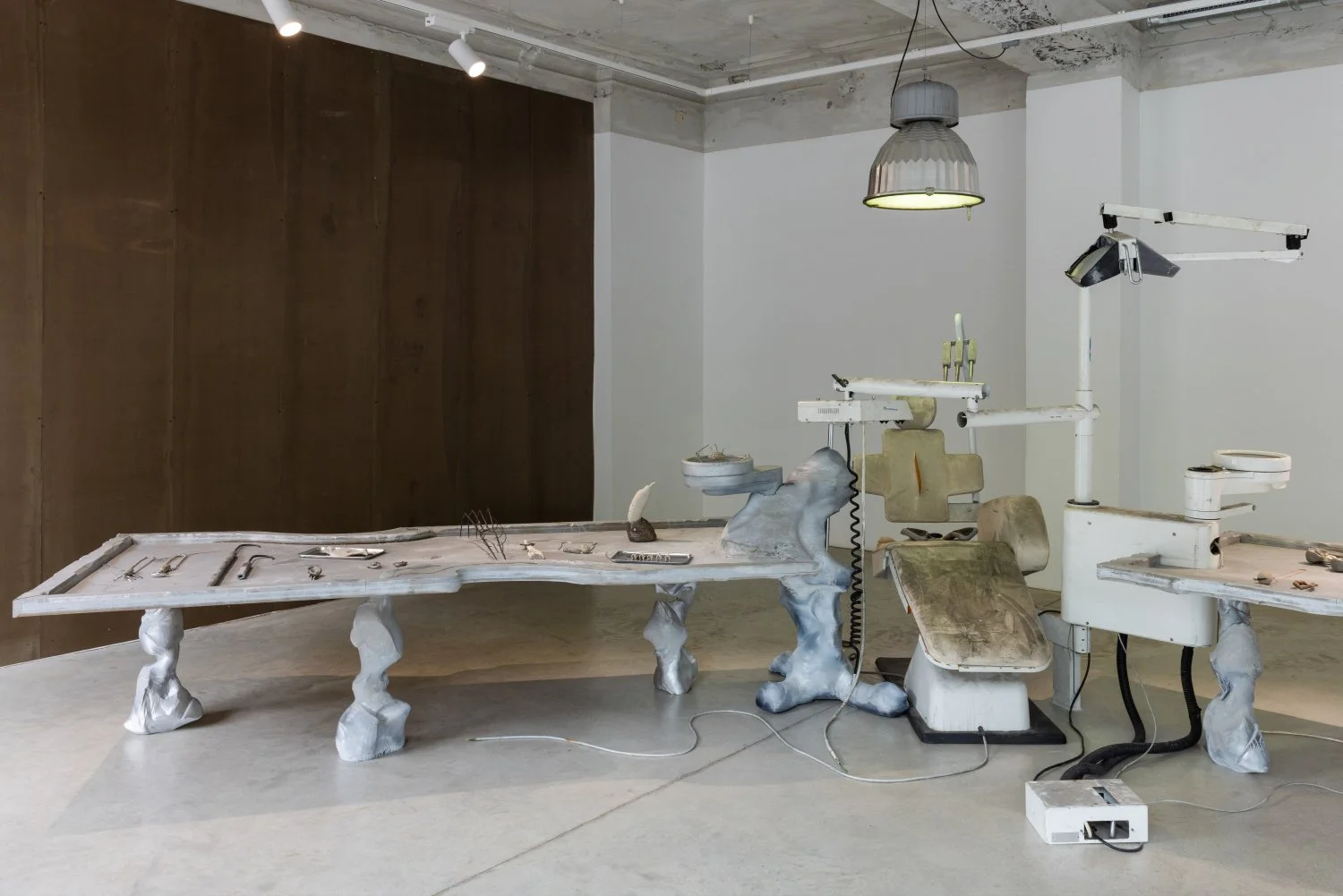
Installation view, Neanderthal Beauty Clinic, 2026. Photo: Kristīne Madjare
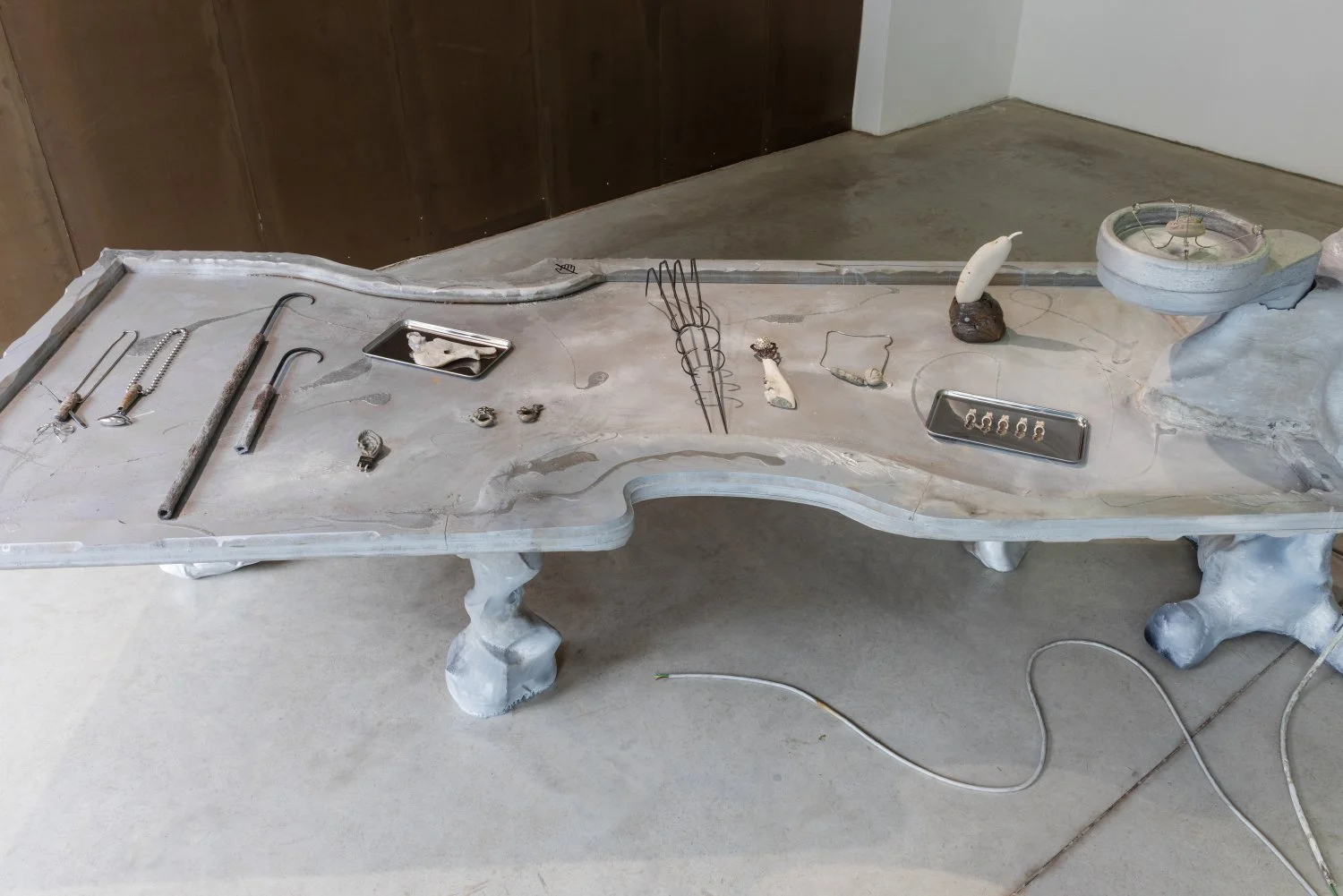
Installation view, Neanderthal Beauty Clinic, 2026. Photo: Kristīne Madjare
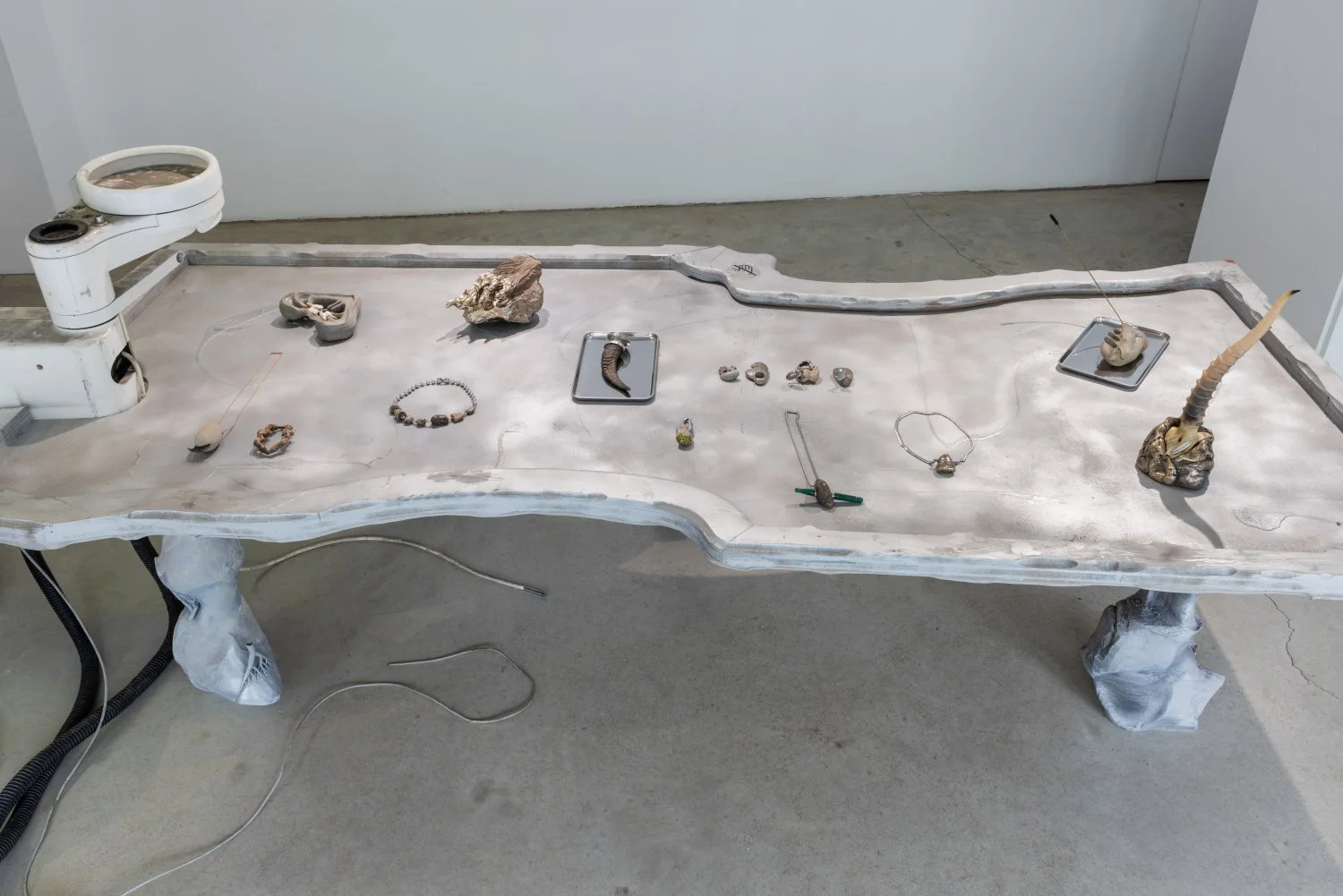
Installation view, Neanderthal Beauty Clinic, 2026. Photo: Kristīne Madjare
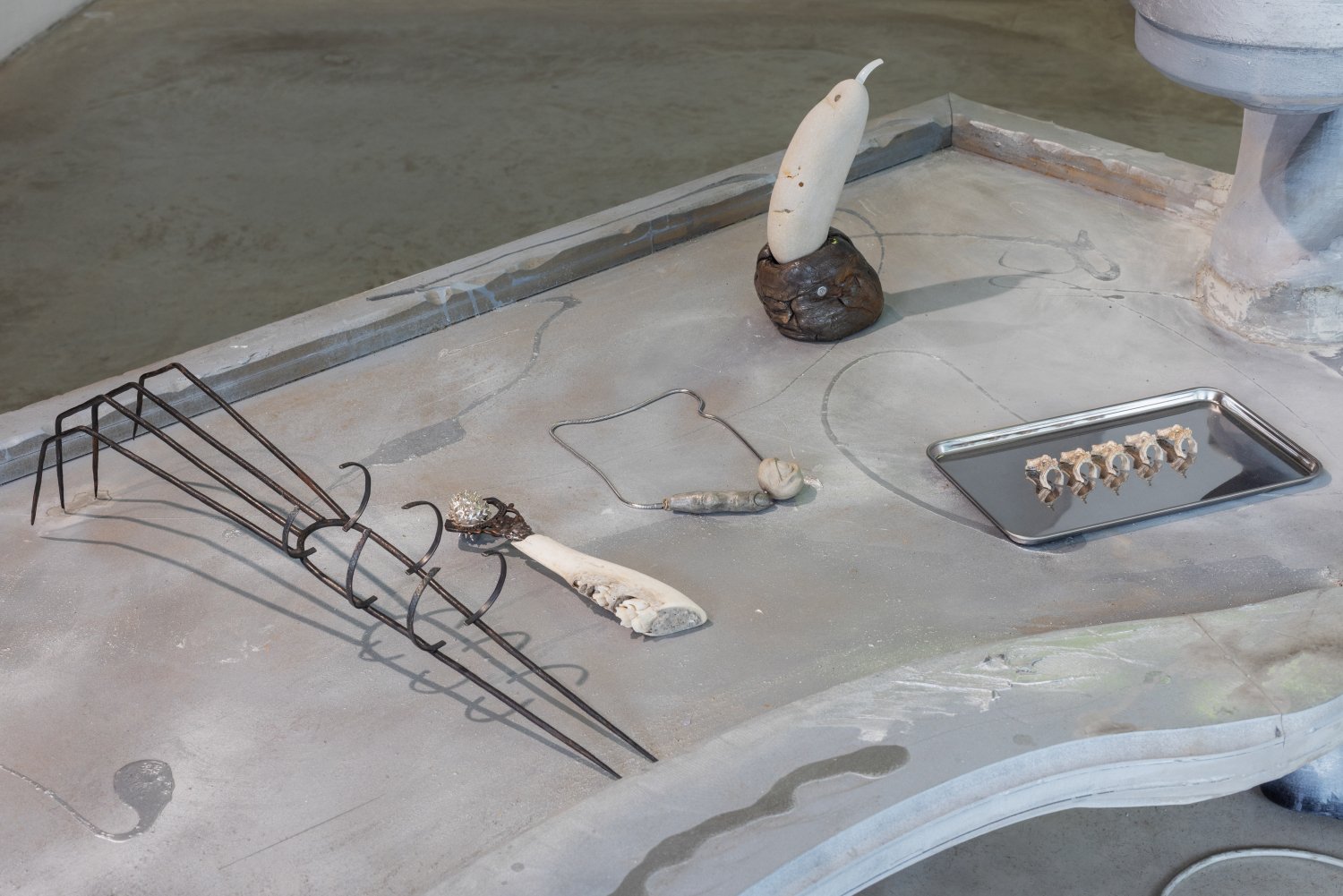
Installation view, Neanderthal Beauty Clinic, 2026. Photo: Kristīne Madjare
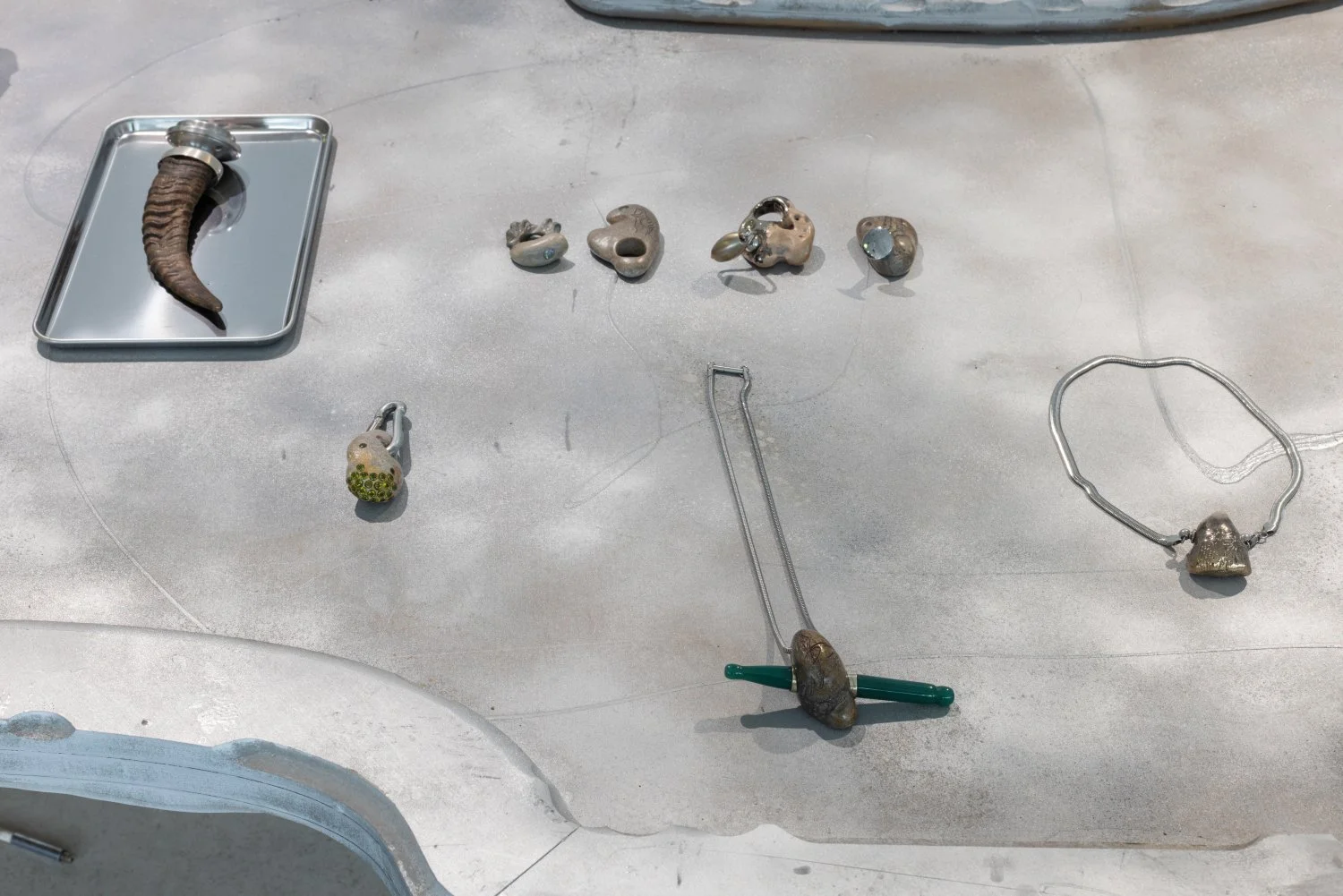
Installation view, Neanderthal Beauty Clinic, 2026. Photo: Kristīne Madjare
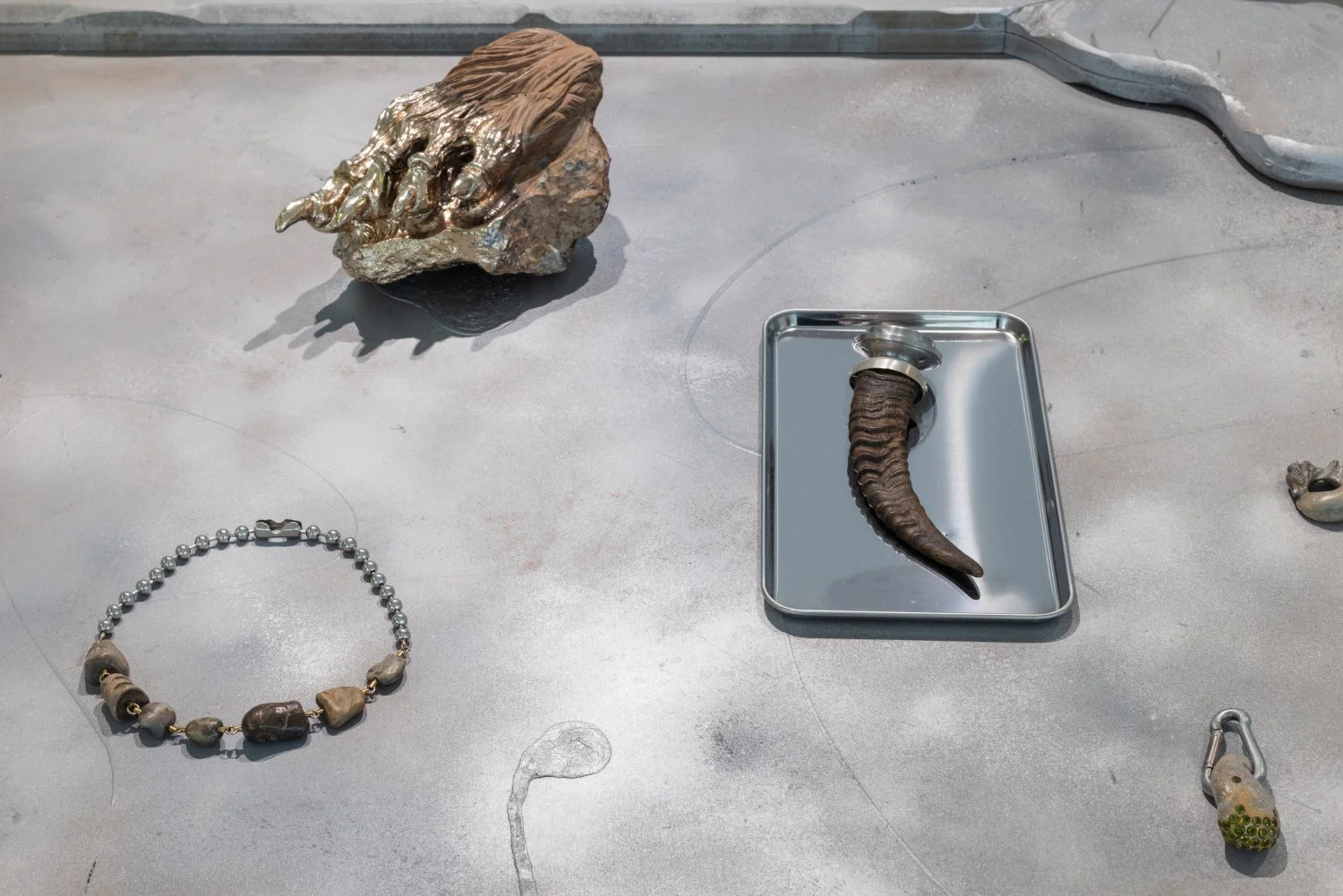
Installation view, Neanderthal Beauty Clinic, 2026. Photo: Kristīne Madjare
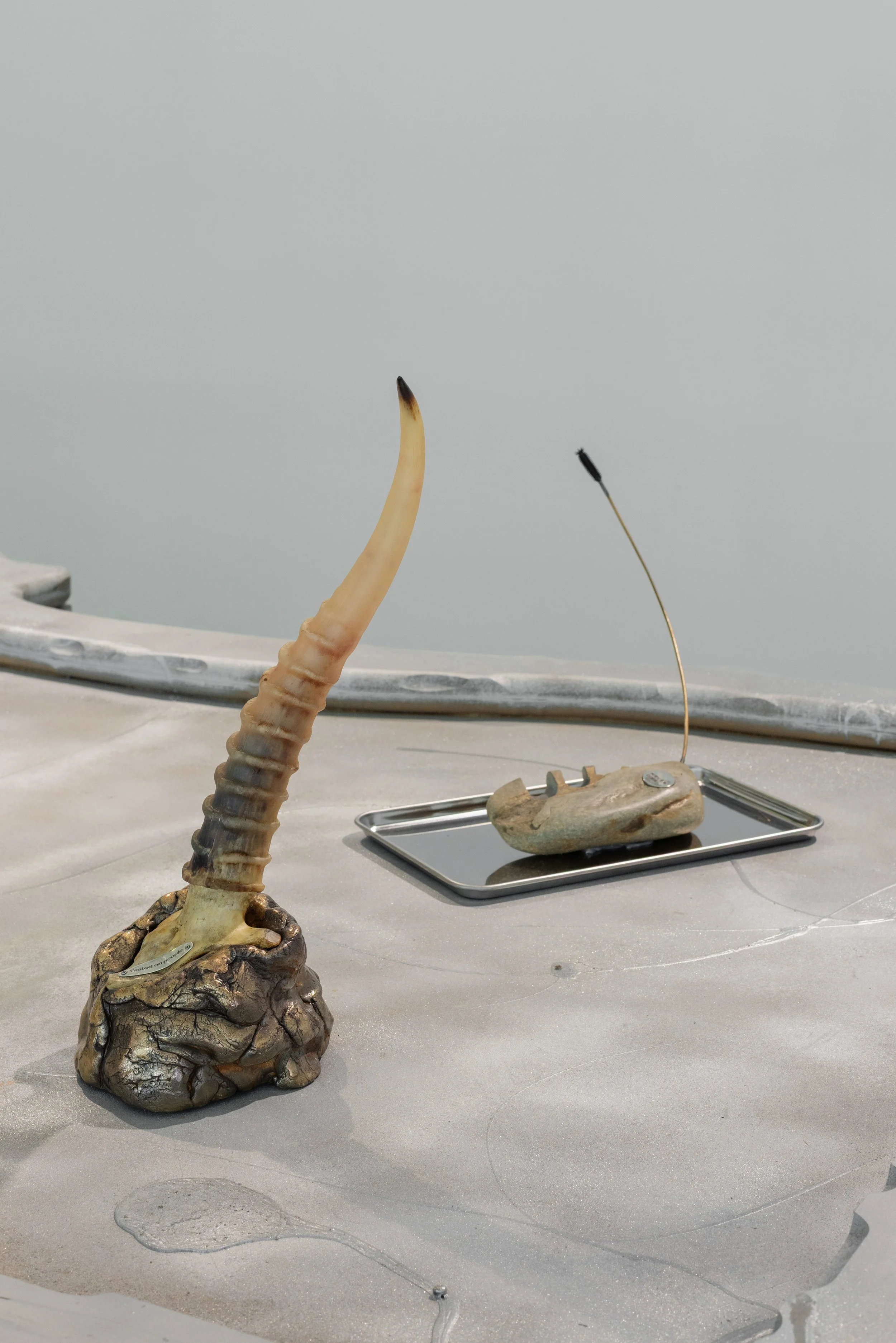
Installation view, Neanderthal Beauty Clinic, 2026. Photo: Kristīne Madjare
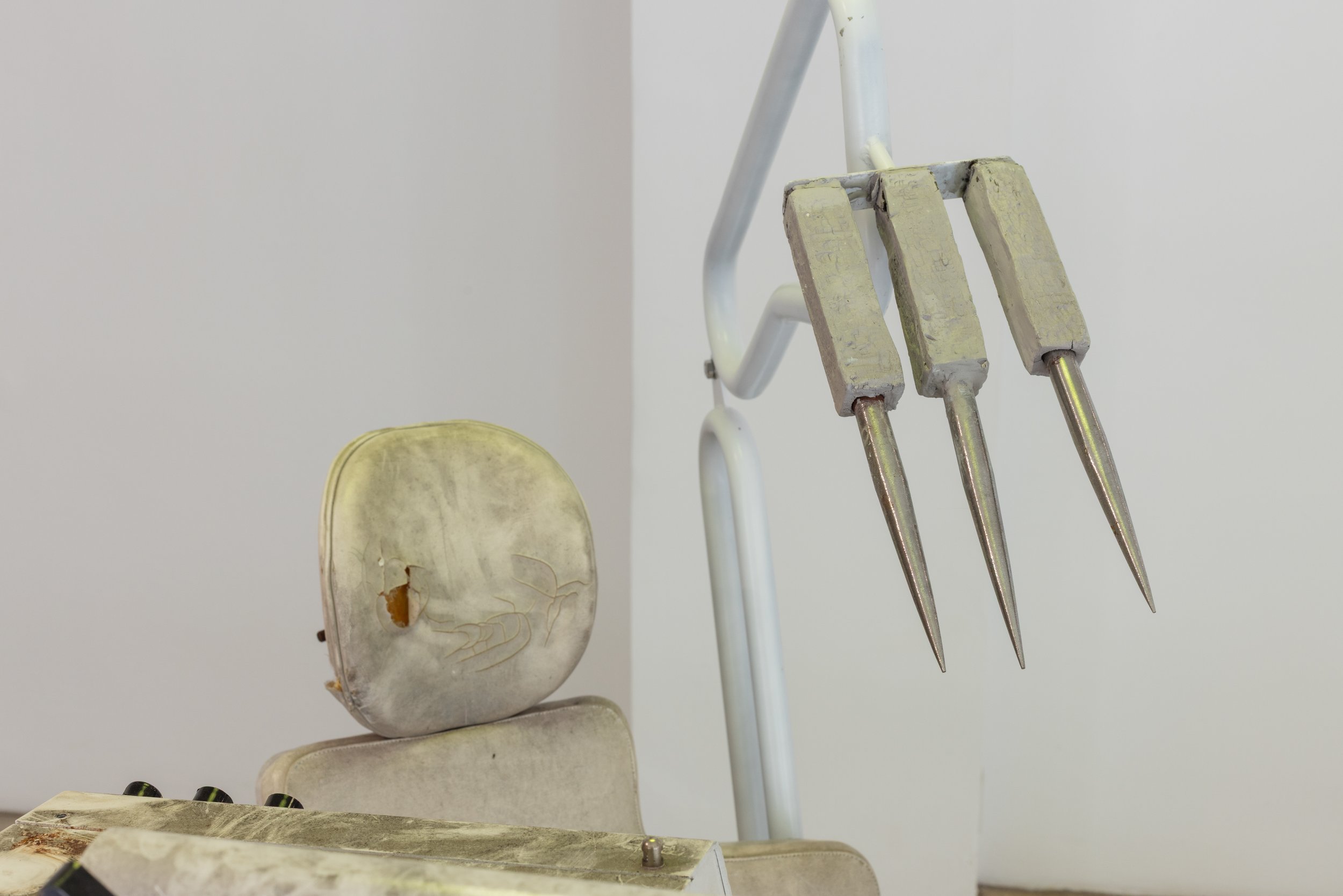
Madlen Hirtentreu, Sculptural object, 2026, forged steel, stainless steel, dye, clay, author’s technique. Photo: Kristīne Madjare
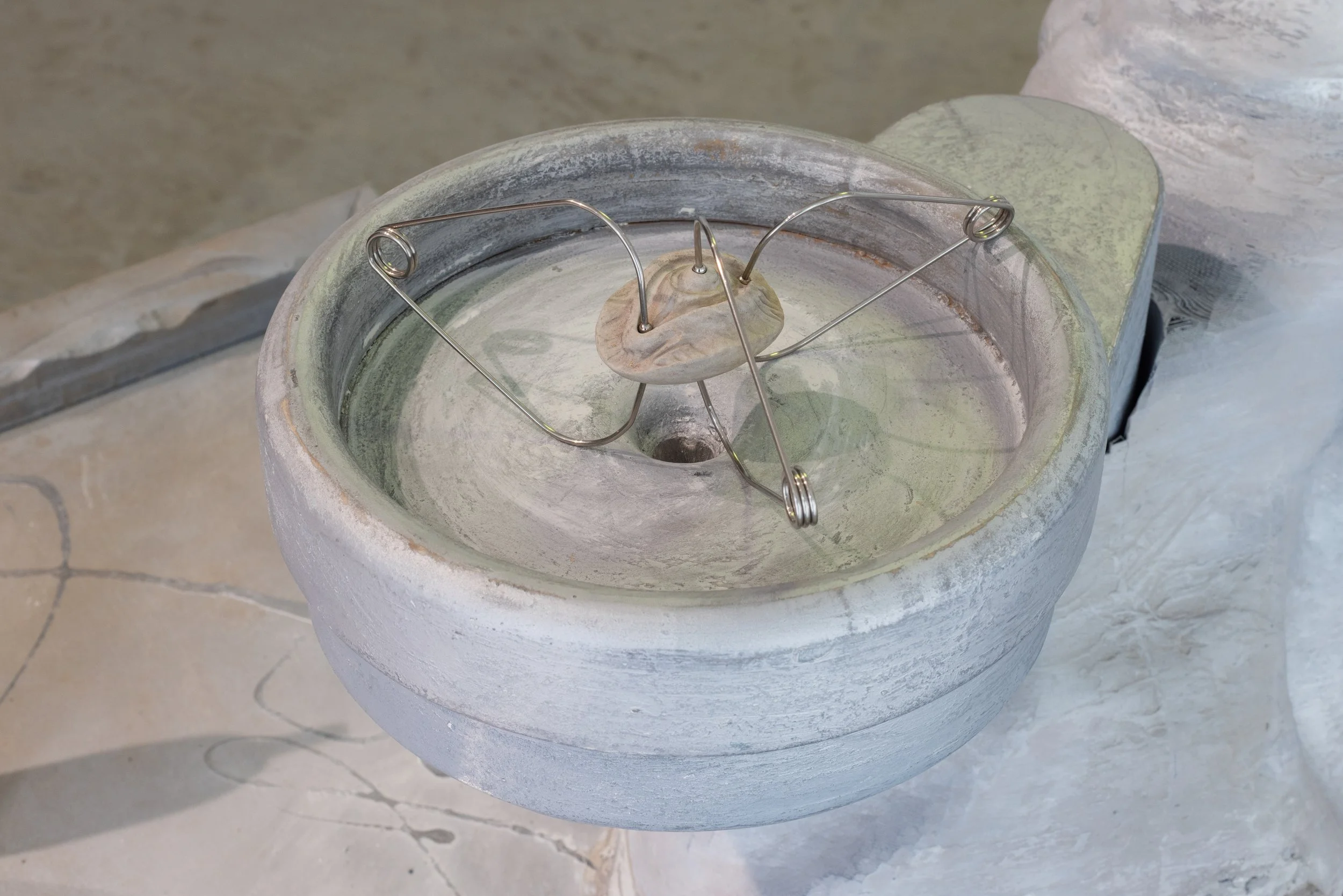
Darja Popolitova, Sculptural object Oculex, 2026, natural horn, clay mass, chrome, acupuncture devices, hand engraving. Photo: Kristīne Madjare
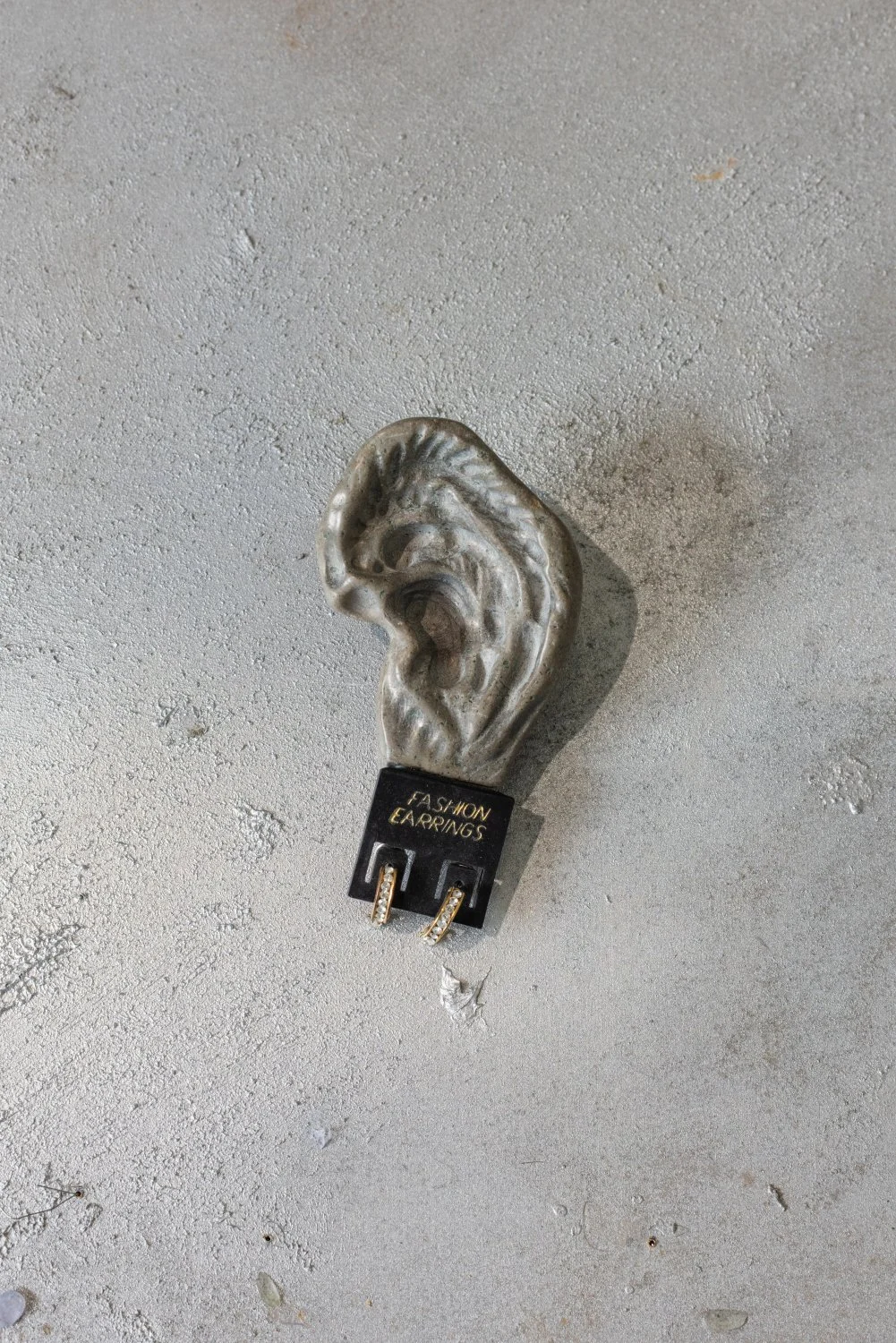
Darja Popolitova, Brooch, 2026, a piece of ancient Baltic limestone plateau, modern earrings, laser engraving, steel fasteners. Photo: Kristīne Madjare
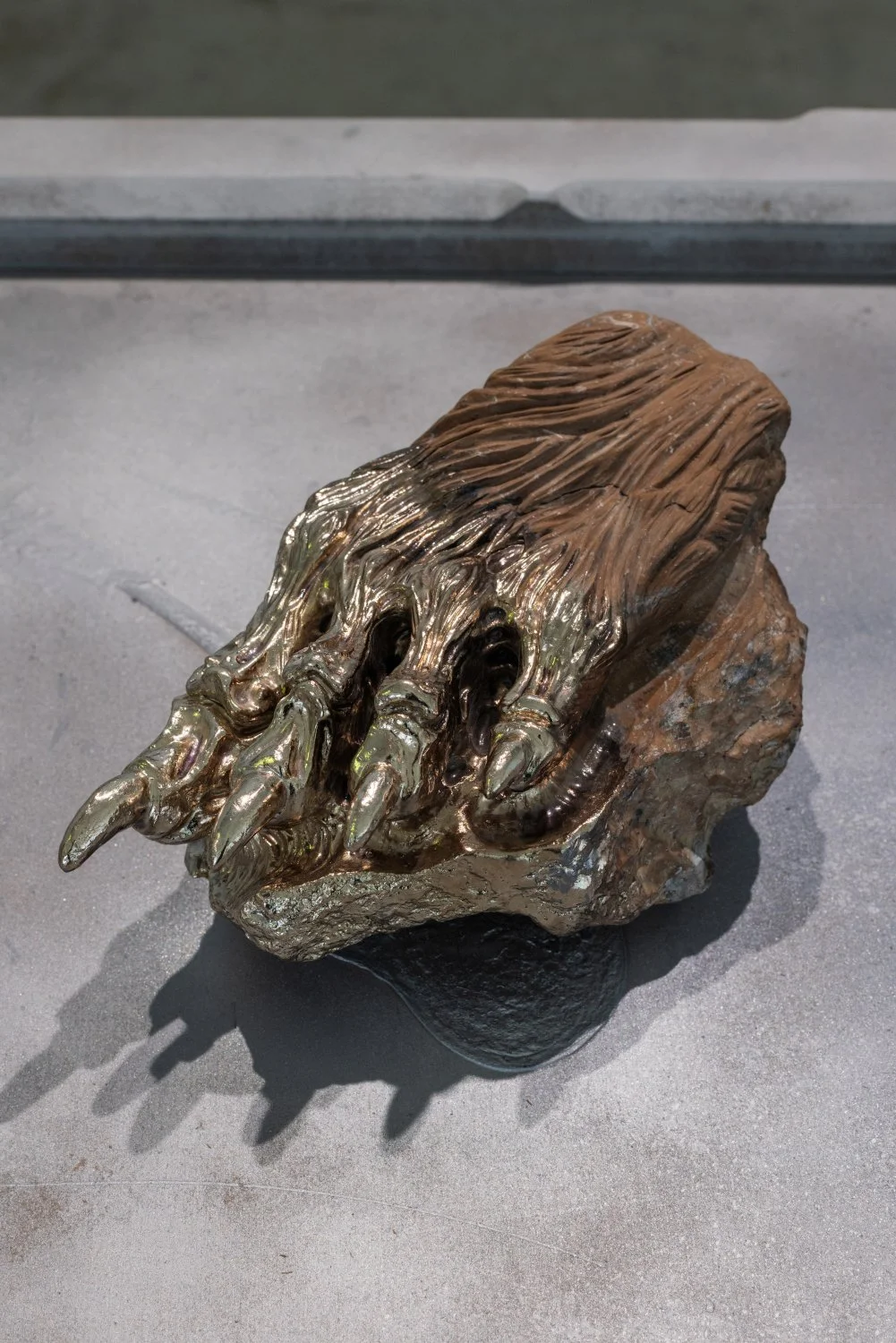
Darja Popolitova, Nails don’t lie, 2026, sculptural object, Estonian oil shale, chrome laser engraving, silicone toe separator. Photo: Kristīne Madjare
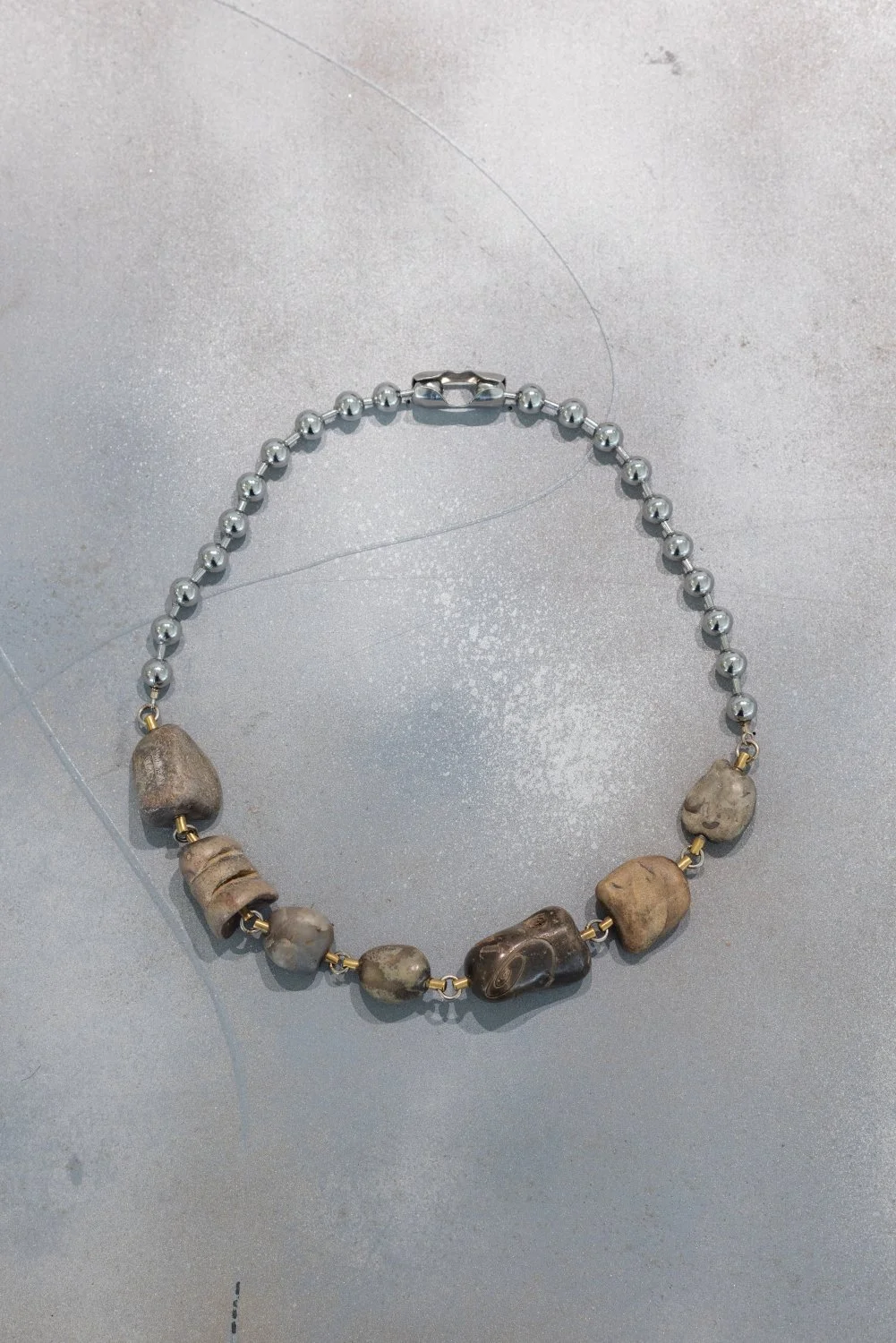
Darja Popolitova, Necklace, 2026, Baltic fossils and limestones, laser engraving, brass, steel chain, silver. Photo: Kristīne Madjare
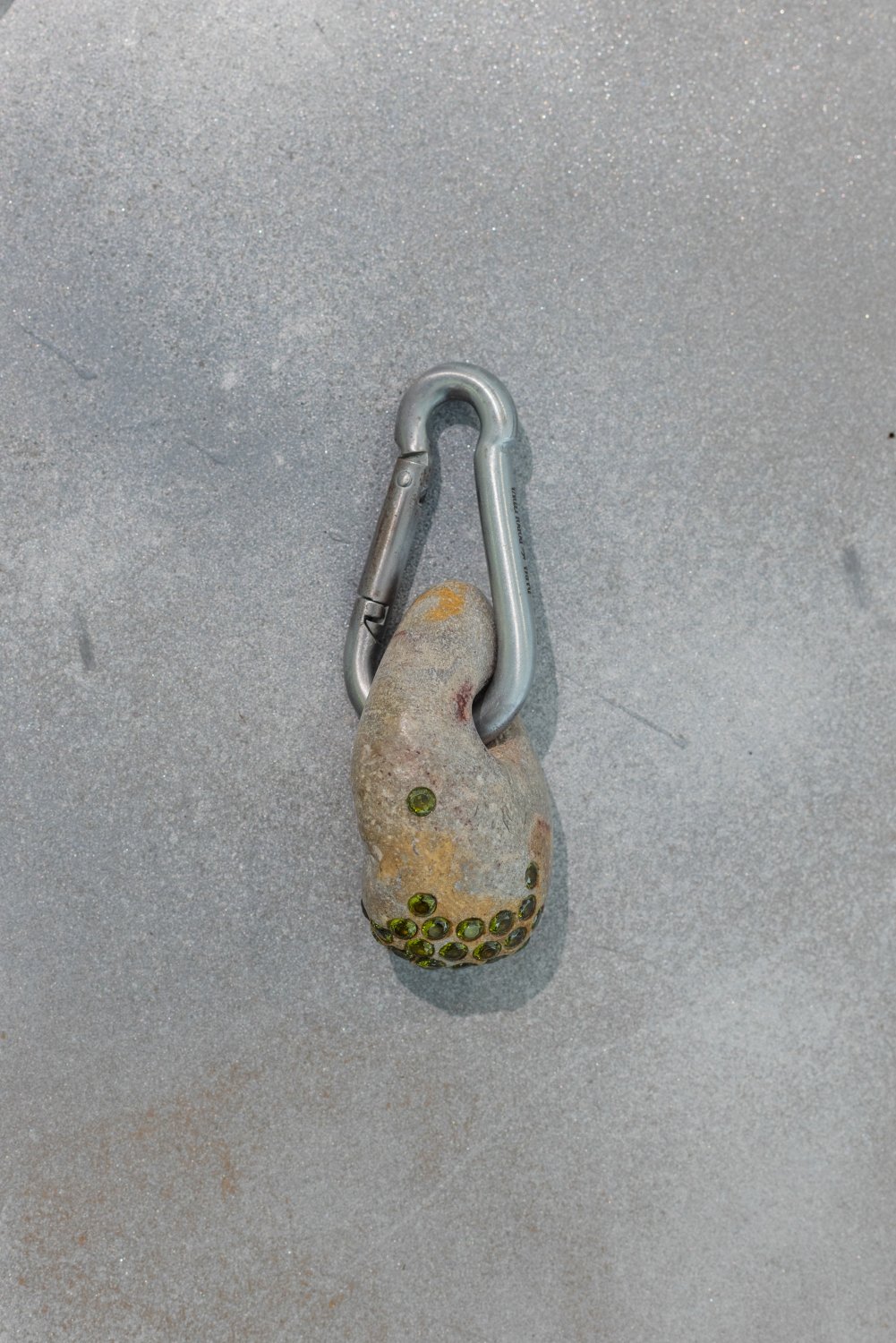
Darja Popolitova, Trouser pendant, 2026, Baltic Sea polished stone with hole, carabiner, laser engraving, lab-grown crystals, primitive shine. Photo: Kristīne Madjare
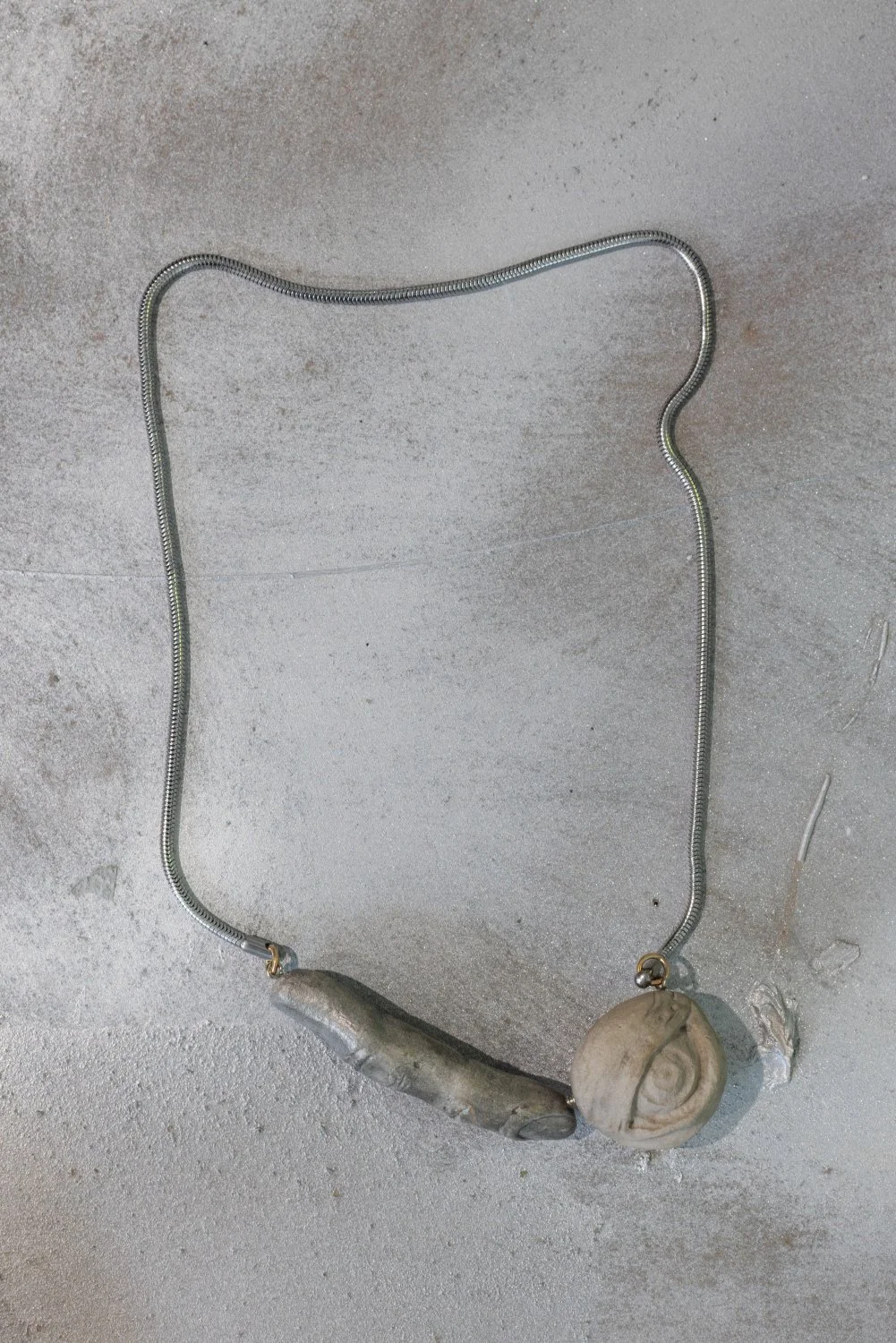
Darja Popolitova, Necklace, 2026, pieces of ancient Baltic limestone plateau, primitive shine, bayonet lock, laser engraving, silver steel chain, gold 14K. Photo: Kristīne Madjare
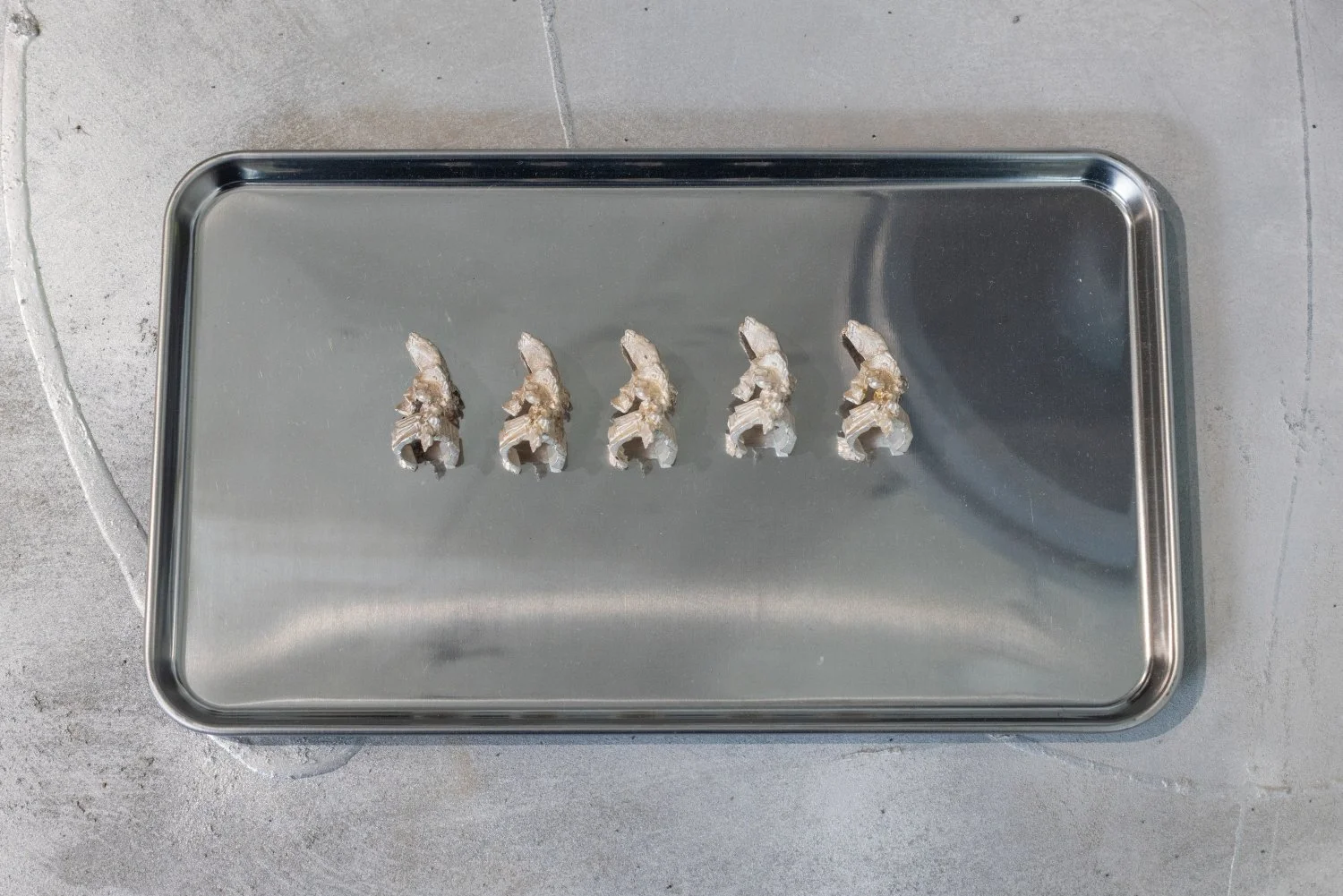
Madlen Hirtentreu, Rings, 2026, oxydized silver. Photo: Kristīne Madjare
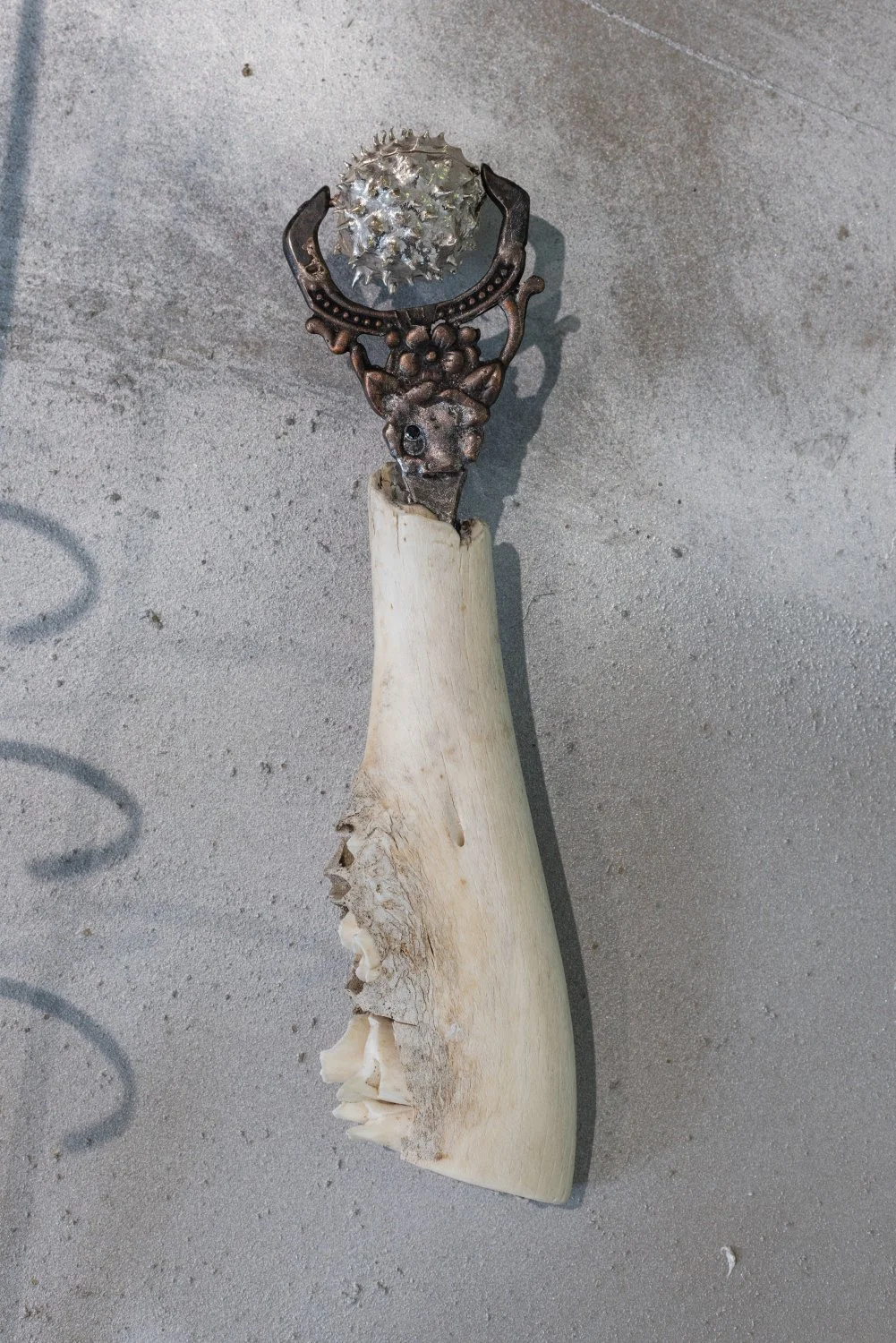
Madlen Hirtentreu, Sculptural object, 2026, silver, ancient chestnut, bronce, bovine bone. Photo: Kristīne Madjare