
Gabija Grušaitė
CIRCULATION
28.05.2026 - 05.07.2026.
Curators: Francesco Urbano Ragazzi
Circulation is the first solo exhibition in Latvia by Gabija Grušaitė. With this project, Grušaitė, a Lithuanian best-selling writer and artist with a background in anthropology, continues her exploration of literature expanded into the space of art.
Curated by the duo Francesco Urbano Ragazzi, the exhibition brings together a new body of work conceived for the occasion, including a video installation, a series of drawings, and a sculptural intervention. Together, these works examine the functions and dysfunctions within systems of exchange between human environments and the outside world.
Circulation is a meditation on the material circuits that regulate contemporary life, from the domestic and the touristic to the planetary. Increasingly mediated by bureaucracy, architecture, and engineering structures, these flows of information are intercepted by the artist and reconfigured into a paradoxically poetic narrative. Two presences, in particular, assert themselves within the gallery space. The first is a monumental sculpture that appears to cry or perspire, its surface activated by a mechanism that simultaneously heats and cools it. The second is a wall composed of underfloor heating panels, which serves as the support for a two-channel video installation. By inverting and exposing the architecture of the exhibition space, the wall transforms functional building materials into an abstract composition, while the screens present six chapters of a fragmented narrative exploring forms of contact between human and non-human subjects. In contrast to these imposing presences, delicate engravings on semi-transparent plates conclude the exhibition, tracing mental cartographies and suggesting possible routes of escape.
With Circulation, Grušaitė explores her narrative voice across different styles, ranging from construction manuals to love songs. The artist’s gaze is focused on the desire, and the ultimate impossibility, for human beings to isolate themselves from the world. This mechanical fable thus becomes a declaration of surrender to codependency.
The exhibition is part of RAW | Riga Art Week 2026
Gabija Grušaitė (born 1987, Lithuania) is an artist and writer based between London, Italy, and Lithuania. Working across speculative fiction, moving image, and sculpture, her practice is grounded in research and inquiry, exploring the porous membranes between internal psychological worlds and social and material reality. Her work investigates how neurobiological survival patterns, shaped by historical trauma and the chronic fatigue of capitalist structures, manifest in social landscapes, the built environment, and everyday life.
Grušaitė traces unarticulated insecurities and longings, examining how they inform relationships with non-human worlds and challenge the perceived divide between nature and the human. Her recent research focuses on climate control and insulation in urban development, considering the pursuit of warmth and comfort as both a survival strategy and a subtle form of Self-imprisonment.
Her interdisciplinary approach is informed by a background in anthropology studied at Goldsmiths, University of London, and she is currently pursuing an MA at the Royal College of Art. Recent exhibitions include FERMA, curated by Francesco Urbano Ragazzi, Sariai, Lithuania (2025); A Date with an Octopus, St. Elizabeth’s Chapel, Vilnius (2024); and Vilnius Art Fair (2024). She has a forthcoming solo exhibition at ASNI, Riga (2026).
In parallel to her visual practice, Grušaitė is an established novelist. She has published three novels, translated into English, Ukrainian, and Latvian. Cold East (2018) received the Penang Monthly Prize in Malaysia and the Jurga Ivanauskaitė Prize in Lithuania, and was shortlisted for the National Book of the Year Award in fiction. Her most recent novel, The Mycelium Dream (2025), became a number one bestseller in Lithuania for forty consecutive weeks and has been included in Year 12 literature curricula.
Francesco Urbano Ragazzi is a curatorial duo founded in Paris in 2008. Their path is marked by the invention of exhibition formats that reinforce the connection between art and reality. Francesco Urbano Ragazzi has organized exhibition projects for numerous public and private institutions, including e-flux, School of Visual Arts, ISCP (New York), MMCA (Seoul), Kunstnernes Hus (Oslo), CERN (Geneva), Maraya Art Centre (Sharjah), Castello di Rivoli Research Center (Turin), Palazzo delle Esposizioni (Rome), Reykjavík International Film Festival, Centre d’Art Contemporain Genève, La Loge (Brussels), La Casa Encendida (Madrid), Institut Français (Paris), Ruya Foundation (Baghdad), and Emirates Foundation (Abu Dhabi).
Between 2021 and 2022, they directed the 17th LIAF Biennial in Norway. In 2023 they curated Jonas Mekas 100! (Italy), the international program celebrating the centennial of the legendary filmmaker, with whom they collaborated extensively. In 2025, Francesco Urbano Ragazzi was named the first Italian Curatorial Fellow at the American Academy in Rome.
Curation – Francesco Urbano Ragazzi
Videography – Ronaldas Buožis
Sound Design – Gabija Grušaitė, Ronaldas Buožis
Production – Justas Janauskas
Design – Vilmantas Zumbys
Special Thanks – Vytautas Eigirdas, Babili & Moto
Supported by: State Culture Capital Foundation
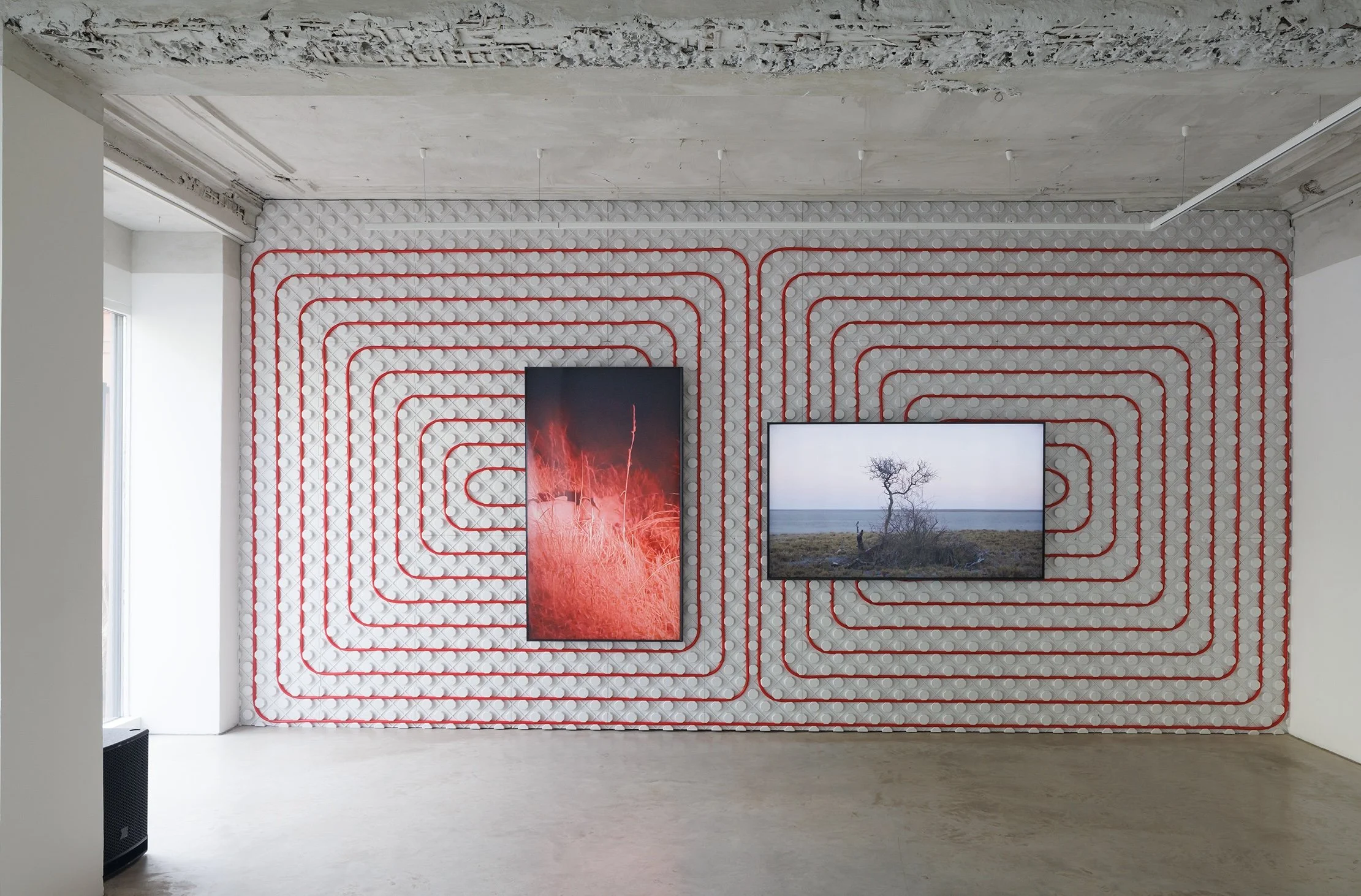
Installation view, Gabija Grušaitė, CIRCUALATION, 2026. Photo: Ansis Starks
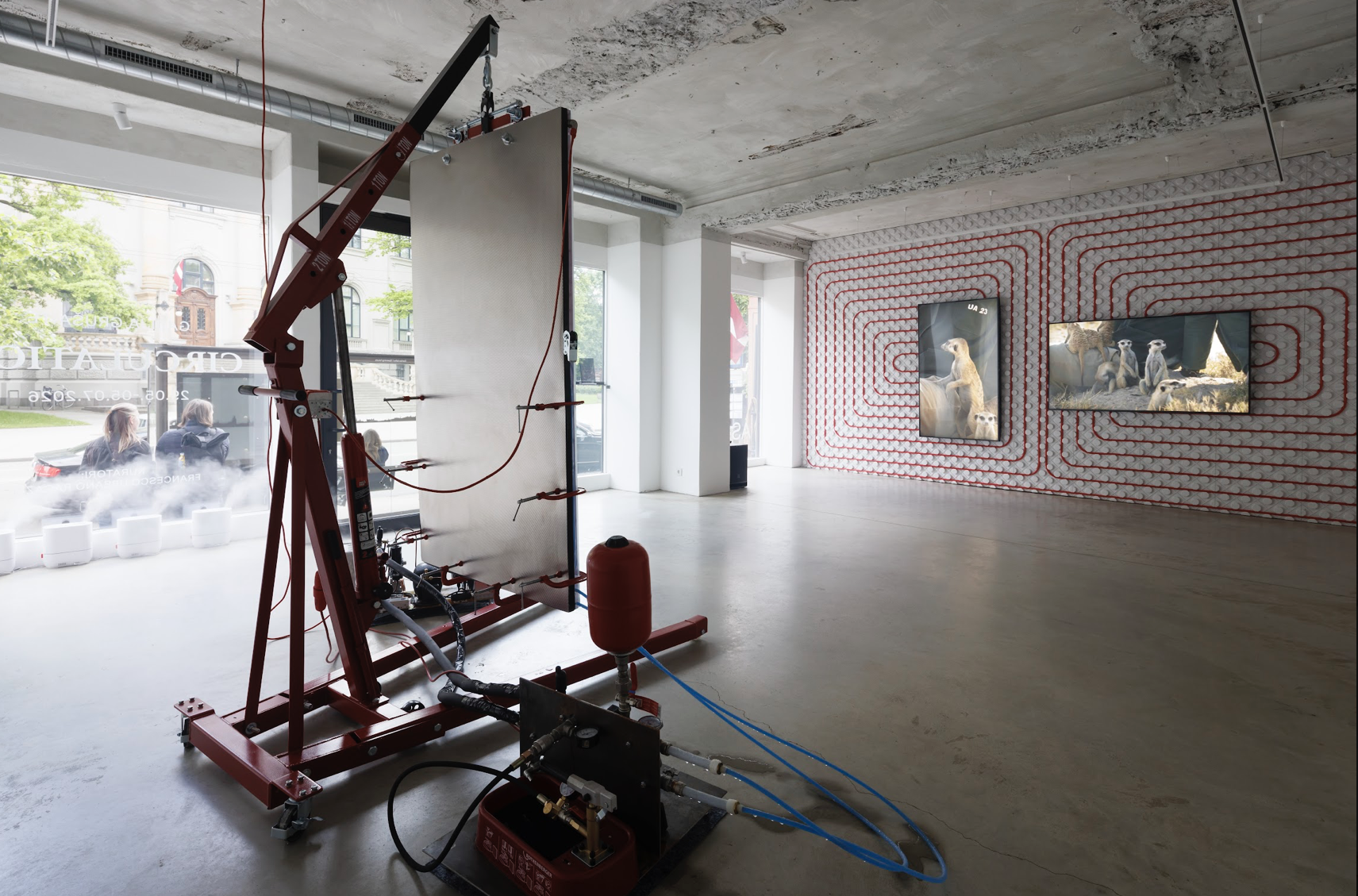
Installation view, Gabija Grušaitė, CIRCUALATION, 2026. Photo: Ansis Starks
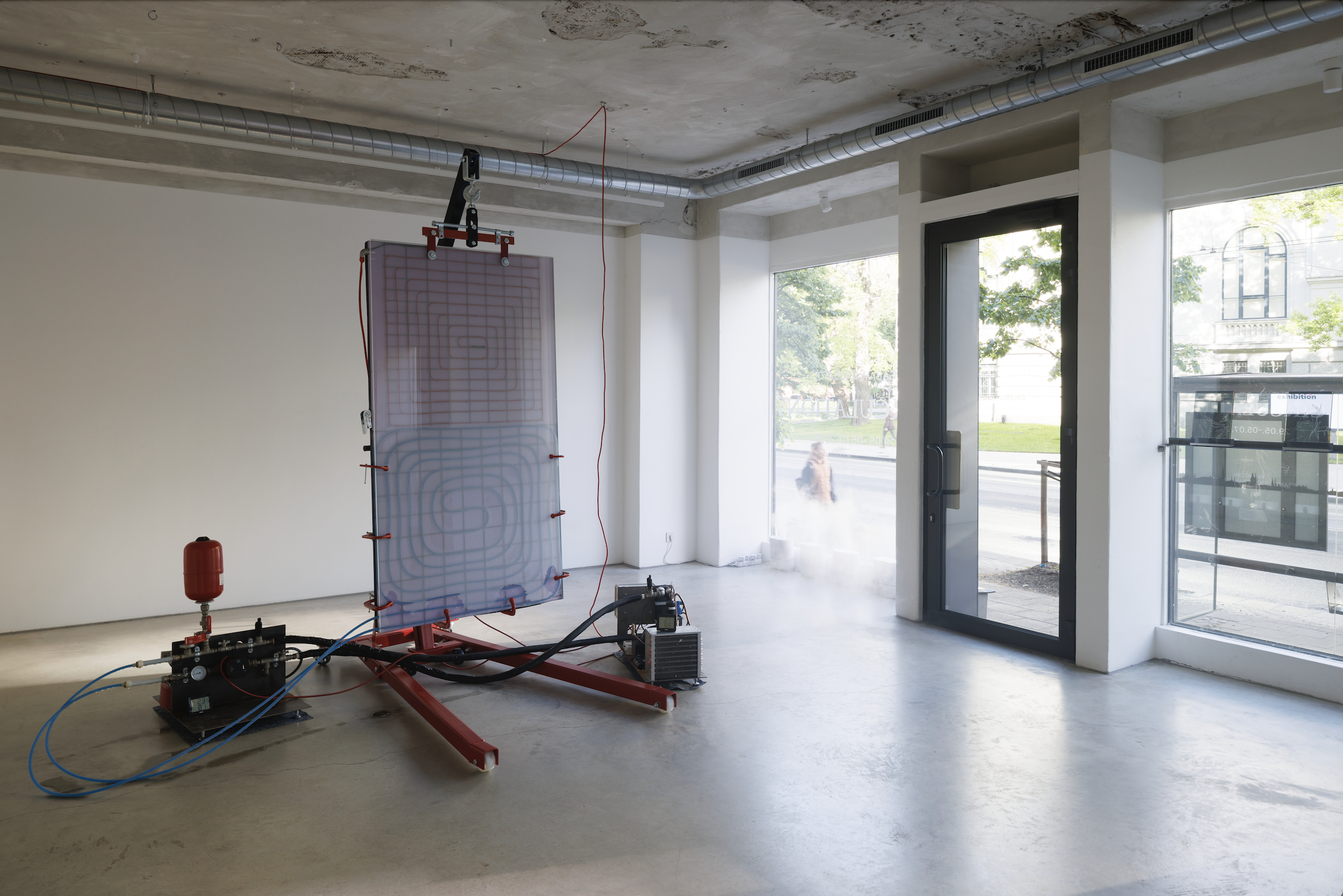
Installation view, Gabija Grušaitė, CIRCUALATION, 2026. Photo: Ansis Starks
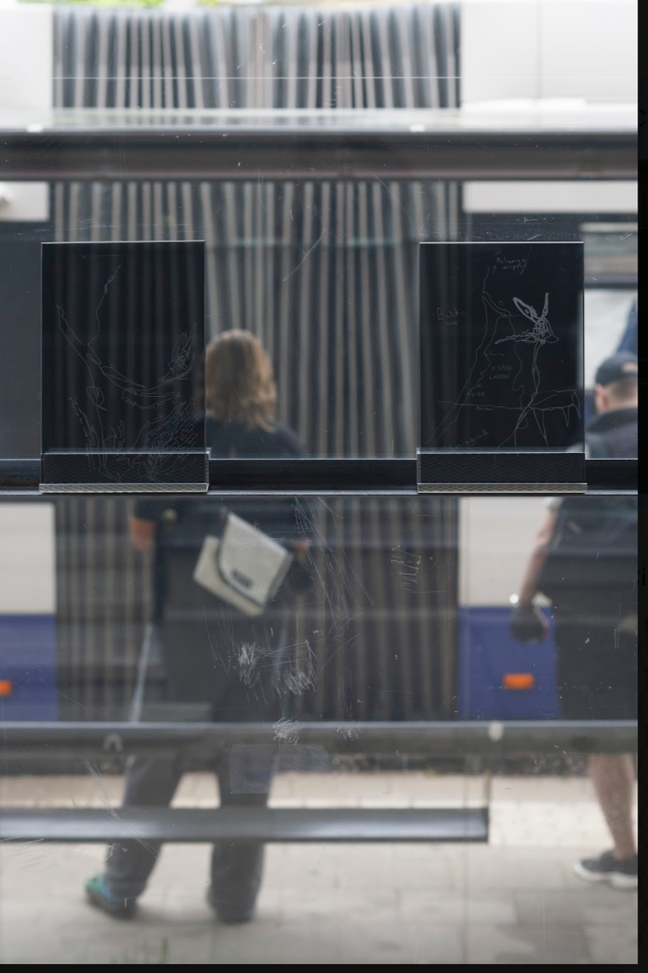
Installation view, Gabija Grušaitė, CIRCUALATION, 2026. Photo: Ansis Starks
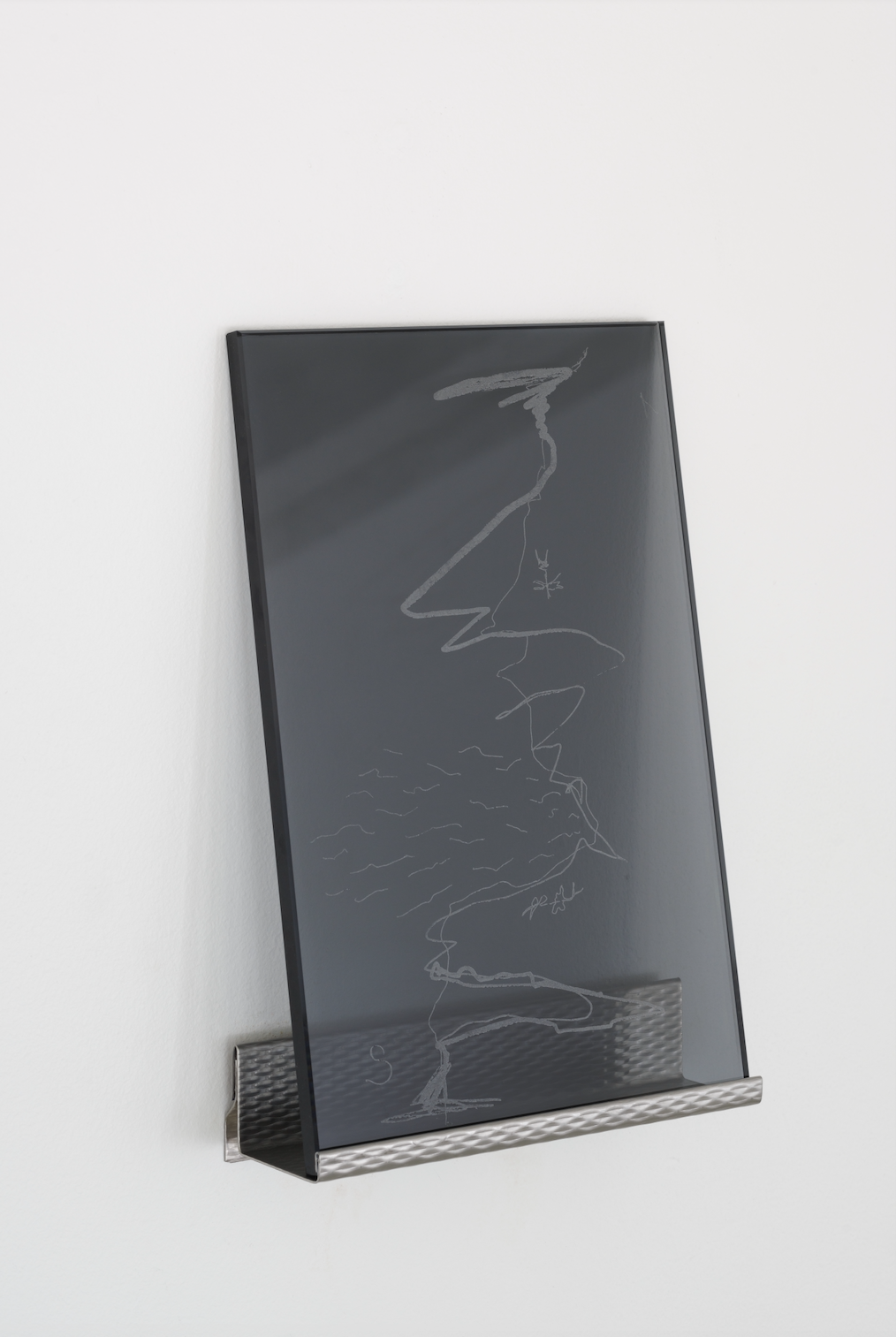
Gabija Grušaitė, FW005, 2026, laser drawing on tempered UV glass, 30 x 20 x 1cm. Photo: Ansis Starks

Gabija Grušaitė, QG, 2026, engineered system integrating hydraulic cooling and electric heating, dimensions variable. Photo: Ansis Starks
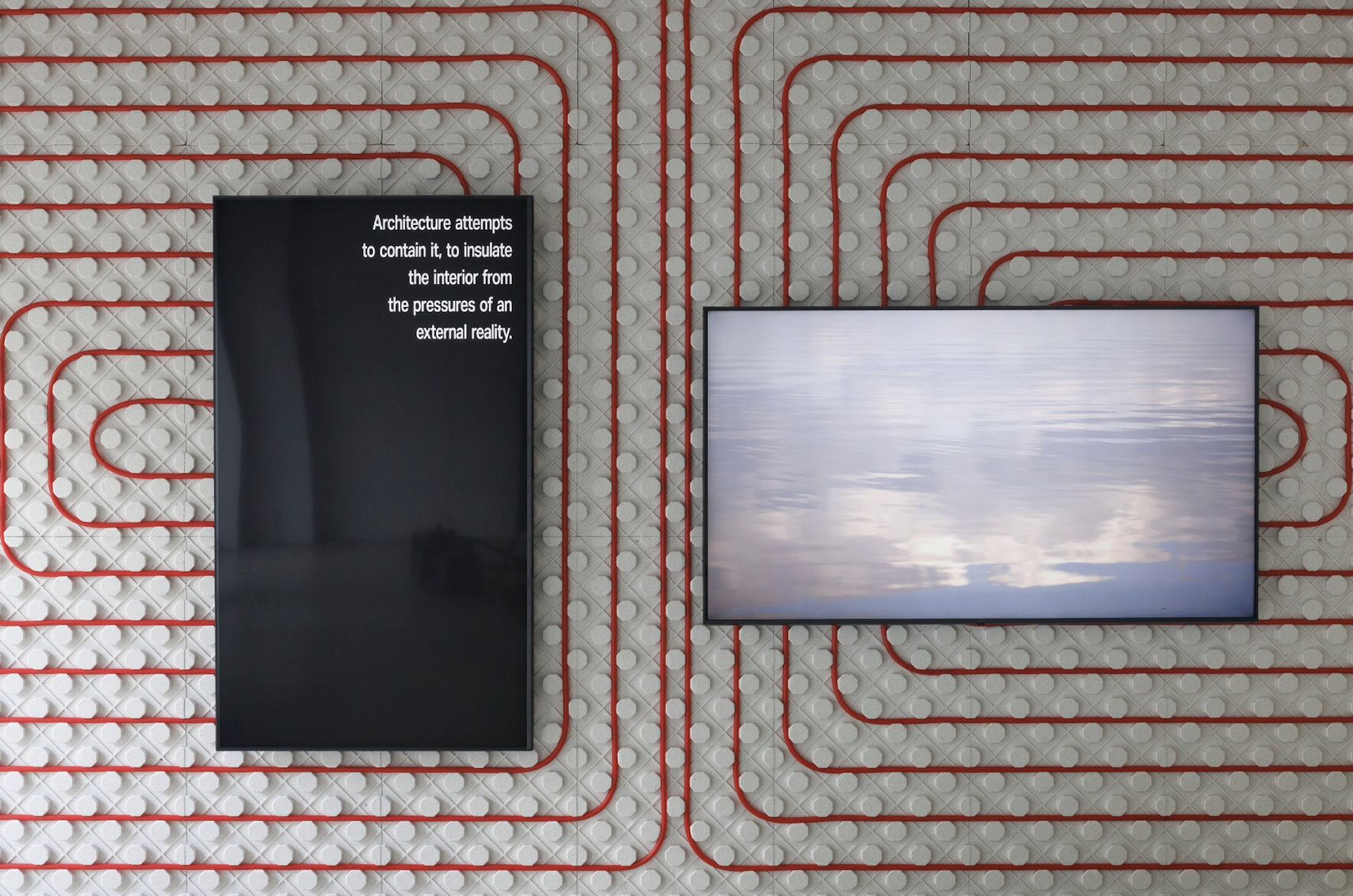
Gabija Grušaitė, The Impossibility of a Touch dual-channel film, 2026, 10 min. 24 sec., Dimensions variable, Edition of 3+1AP. Photo: Ansis Starks
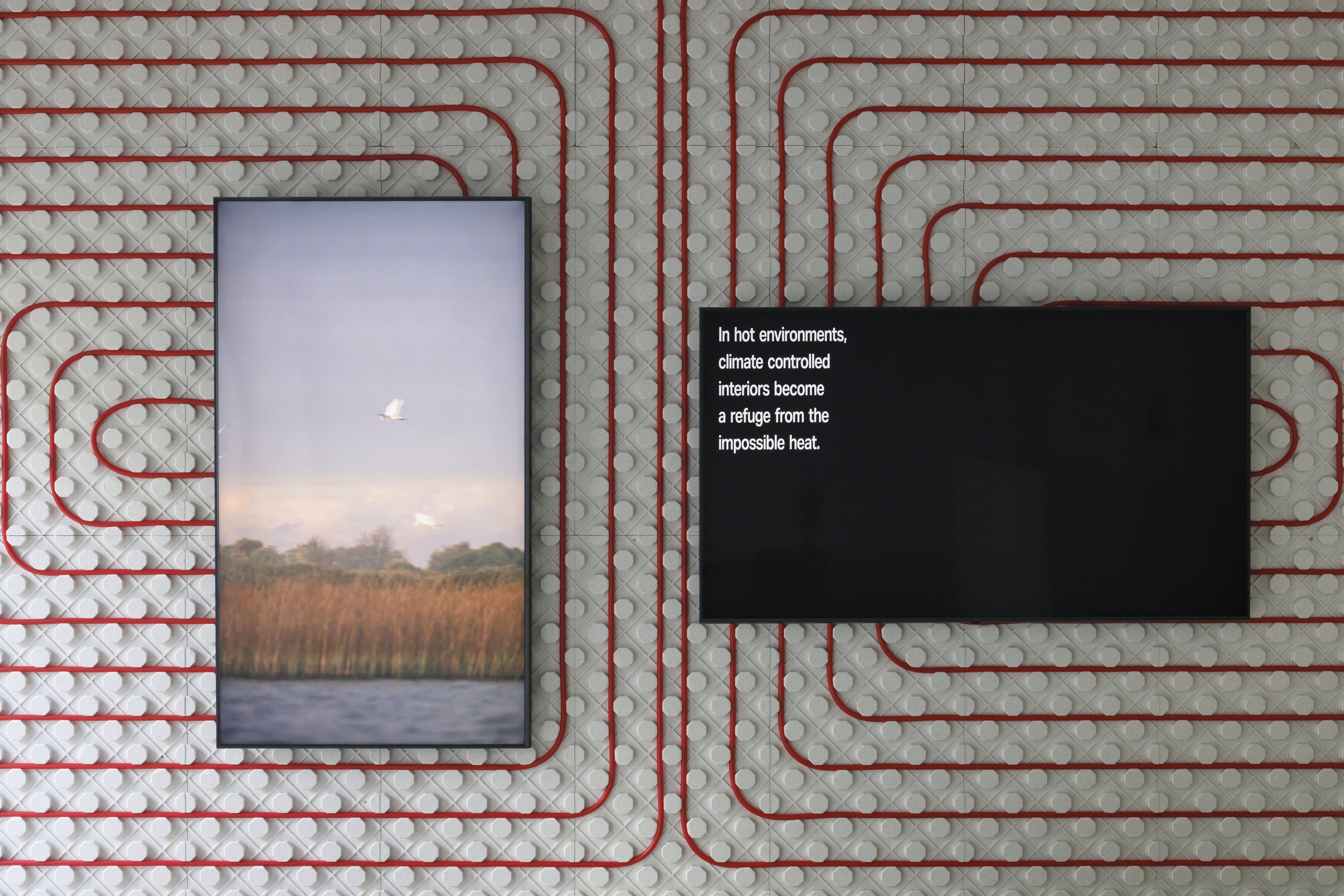
Installation view, Gabija Grušaitė, CIRCUALATION, 2026. Photo: Ansis Starks